POTATO PANCAKES WITH ASIAN PEAR COMPOTE (GAMJA JEON)
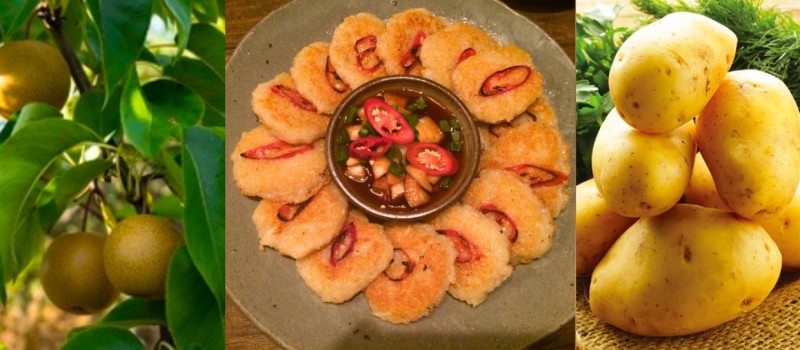
Coming from North-Central New Jersey and New York City, I’ve been lucky to have had my share of latkes. Traditional Korean potato pancakes are different than Jewish latkes, using a much finer grating of the potatoes, which results in a softer texture. I’ve brought the two versions together in my Korean take on the classic fried potato pancakes with apple pureÌe. My potato pancakes are crispy and have more potato integrity, but I’ve included Korean flavours as well as an Asian pear compote in lieu of applesauce. I think it marries the best of both worlds. I like to use a mixture of russet and Yukon Gold potatoes. The Russets provide crispness, while the Yukons have better potato flavour and lend a golden colour. I don’t peel either type. Feel free to serve with a traditional soy and onion dipping sauce as well, as pictured.
Ingredients
MAKES ABOUT 10 PANCAKES
Compote
- 600 g (11⁄4 lb) Asian pears or other firm but ripe pears, peeled, cored and cut into 2.5 cm (1 in) pieces
- 2 tbsp sugar
- 1 tbsp fresh lemon juice
- 1 (1 cm/1⁄2 in) knob fresh ginger, peeled and sliced
- Pinch of sea salt
Pancakes
- 450 g (1 lb) Russet and Yukon Gold potatoes, or similar, unpeeled (any ratio of the two types)
- 1 onion, quartered
- 2 tbsp potato starch
- 1 tbsp crushed sesame seeds
- 2 tsp gochugaru (Korean chilli flakes)
- 1 tsp gochujang (Korean chilli paste)
- 1 tsp sea salt, plus extra to finish
- 2 large eggs, lightly beaten Vegetable oil, for frying
Method
FOR THE COMPOTE
- In a small saucepan, combine all the compote ingredients and 2 tablespoons water and bring to the boil over a medium-high heat, stirring until the sugar has dissolved. Reduce the heat to maintain a simmer, stirring occasionally, until the fruit mashes easily with the back of a fork, about 20 minutes. Remove from the heat, discard the ginger and mash the mixture into a chunky sauce. (If you prefer a smooth sauce, pureÌe the mixture in a food processor.) Set aside.
FOR THE PANCAKES
- In a food processor fitted with the medium grating disc, shred the potatoes and onion quarters, alternating between the two (the onion juices help keep the potatoes from discolor- ing). Alternatively, grate the potatoes and onion on the large holes of a box grater.
- Working in batches, take handfuls of the potato- onion mixture and squeeze out as much liquid as possible. (You can also wrap the mixture in kitchen paper and squeeze it out by twisting the ends of the paper, but I’ve always found it more effective and quicker to do it by hand.) Transfer the mixture to a large bowl, add the potato starch, sesame seeds, chilli flakes, chilli paste and salt, and toss together. Add the beaten eggs and mix well. Transfer the mixture to a fine-mesh sieve set over the bowl so any excess liquid can drain.
- In a large non-stick frying pan, heat 5 mm (1⁄4 in) of oil over a medium-high heat. Working in batches, put 2 rounded tablespoons of the mixture on a wide spatula and flatten it with your hand to form a 7.5 cm (3 in) wide pancake. Slide the pancake into the oil and cook until golden brown on the base, about 3 minutes. Flip and cook for a further 2–3 minutes until the other side is golden brown and cooked through. Transfer to a wire rack or kitchen paper-lined plate to drain. Season immediately with a little salt. Repeat with the remaining mixture, adding more oil to the pan as needed.
- Serve pancakes hot with your dipping sauce.
Philly Cheesesteak Dumplings
Mango lime Ricotta Parfaits
Judy’s Korea
Judy’s ultimate guide to Korean food. Get started on your journey! Find out the chef’s top kitchen necessities and best places to eat in Seoul.
Shop online
Shop cookery books and affiliated discounts for Judy’s favourite luxury kitchenware, home accessories and beauty products.
Restaurants
Explore Seoul’s fun, vibrant and colourful flavours at our Korean-American street-food restaurant: Seoul Bird. Visit and celebrate with us.